


Leaving millions on the table
Designer Yasmine Mahmoudieh is an authority on multi-sensory design.
I picked up the thread of a LinkedIn conversation recently where Yasmine contributed the following:
Hotels are leaving millions on the table because they ignore what guests actually remember.
Most hotel development conversations still revolve around:
plans, budgets, renders, “concept”.
Almost nobody asks:
“What will guests actually remember from this place?”
That’s why I was genuinely happy to discover the work of Charles Spence,
an experimental psychologist at Oxford who studies multi‑sensory hospitality.
Spence makes a clear point:
visual design is important, but hoteliers ignore the non‑visual senses at their peril.
Poor design around sound, scent, touch, temperature and air
doesn’t just irritate guests – it drags down their overall experience and their ratings.
Spence’s work shows that when hotels ignore the non‑visual senses, they hurt guest experience and ratings – while well‑designed sensory interventions can drive significant sales and commercial gains. If you don’t design for all senses, you’re leaving serious revenue on the table.
For me, that wasn’t a surprise.
It was a confirmation:
Science finally caught up with what I’ve been building into projects for years.
That post remained with me for days.
I have so often pondered what makes a guest return to the same hotel, and what steps must the hotelier take to entice the guest to return, knowing that return business is so vital.
My conclusions have always centred around the service and the staff.
It is, after all, a people business.
People like people, as the saying goes, and enthusiastic, bright, well-trained staff should elevate the guest experience to such a level that guests will want to return again and again.
But during the times when a guest is left alone within a hotel, in the room, in the restaurant or the bar, or the lounge, will the interior design provide sufficient interest to evoke emotional attachment?
Yasmine Mahmoudieh argues strongly that multi-sensory design is a key component in delivering that perfect hotel environment.
It can trigger feelings of warmth, belonging, comfort and general wellbeing.
Keen to learn more we asked her to elaborate, giving examples of how this approach to design has benefitted her clients.
Beyond the Visual: Designing Hotels to Be Felt
By Yasmine Mahmoudieh
I have worked with the five human senses in hospitality for more than 25 years—long before multi-sensory design became a familiar industry term.
My work is driven by a simple conviction: a hotel is not simply seen; it is felt.
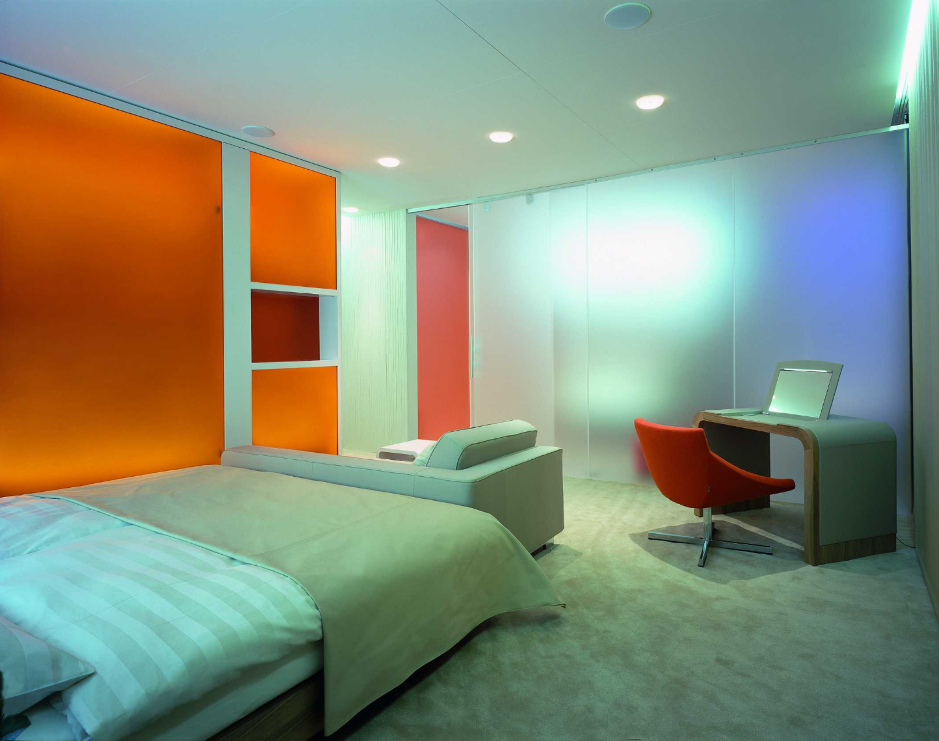
In 2005, I created Five+ Sensotel, a travelling exhibition exploring the relationship between the five human senses and the five-star hotel experience.
At that time, luxury hospitality was often expressed through a conservative visual language: brass, imitation gold, ornate detailing and familiar references to traditional grandeur.
I wanted to challenge the assumption that luxury had to replicate the past in order to make people feel welcomed, protected, at home or somewhere special.
My proposition was that the same emotional responses could be created in a completely contemporary way if we attuned all the senses.
Sight, sound, scent, touch and taste could work together to create warmth, familiarity, intimacy and a feeling of care—without repeating outdated symbols of luxury.
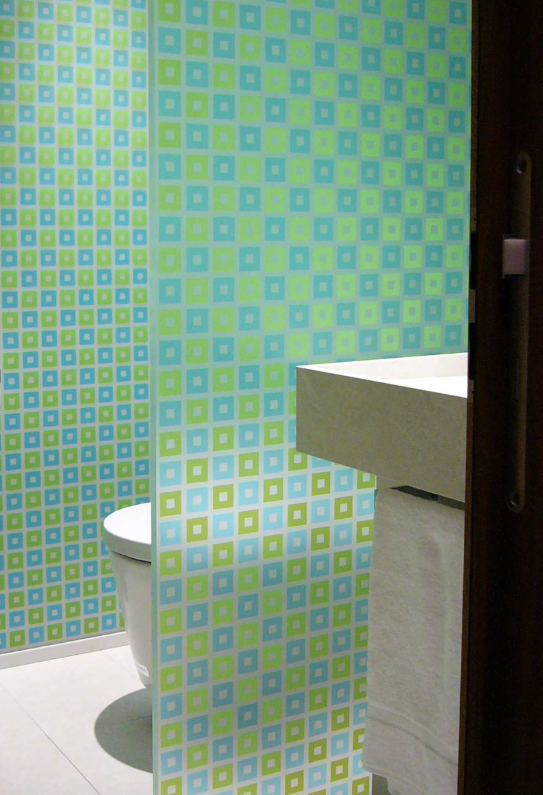
Five+ Sensotel isolated five spatial experiences, each dedicated to one sense, before bringing them together in two hotel-suite concepts.
Developed with international collaborators, including fragrance specialists at IFF in New York, it explored sound, scent, materiality, light, technology and human touch.
It travelled through Austria and Switzerland before coming to London, where it was presented at the Sleep hospitality-design event at Old Billingsgate.
It then remained on view for several months in the Tea Building in Shoreditch.
Why non-visual senses matter
When I first speak with an owner, operator or developer, I do not begin with a mood board. I begin with questions.
Why should this hotel exist here?
Who is it for?
What should a guest feel on arrival?
What should change in their body and state of mind during their stay?
What would success look like for the guest, operator and investor?
We are always sensing; there is no neutral experience of space.
Every hotel has a temperature, acoustic character, scent, texture, light quality, rhythm and emotional effect.
The question is not whether we design for the senses, but whether we do so consciously and whether the elements reinforce one another.
I have worked intuitively with the senses for decades, guided by how a place feels rather than by a formula.
I was therefore pleased to discover the work of an Oxford professor of experimental psychology, which validates much of what I had been practising instinctively: we experience space through the combined effect of what we see, hear, smell, touch and feel—often without noticing the individual cues.
His research shows that sound, scent, light, temperature and materiality influence how comfortable, safe, coherent and pleasurable an environment feels.
For investors and owners, this is not a decorative extra.
When sensory elements are ignored, even a visually beautiful property can leave commercial value on the table.
When they are designed as one coherent, place-specific experience, they can strengthen guest satisfaction, differentiation, repeat visitation and long-term asset value.
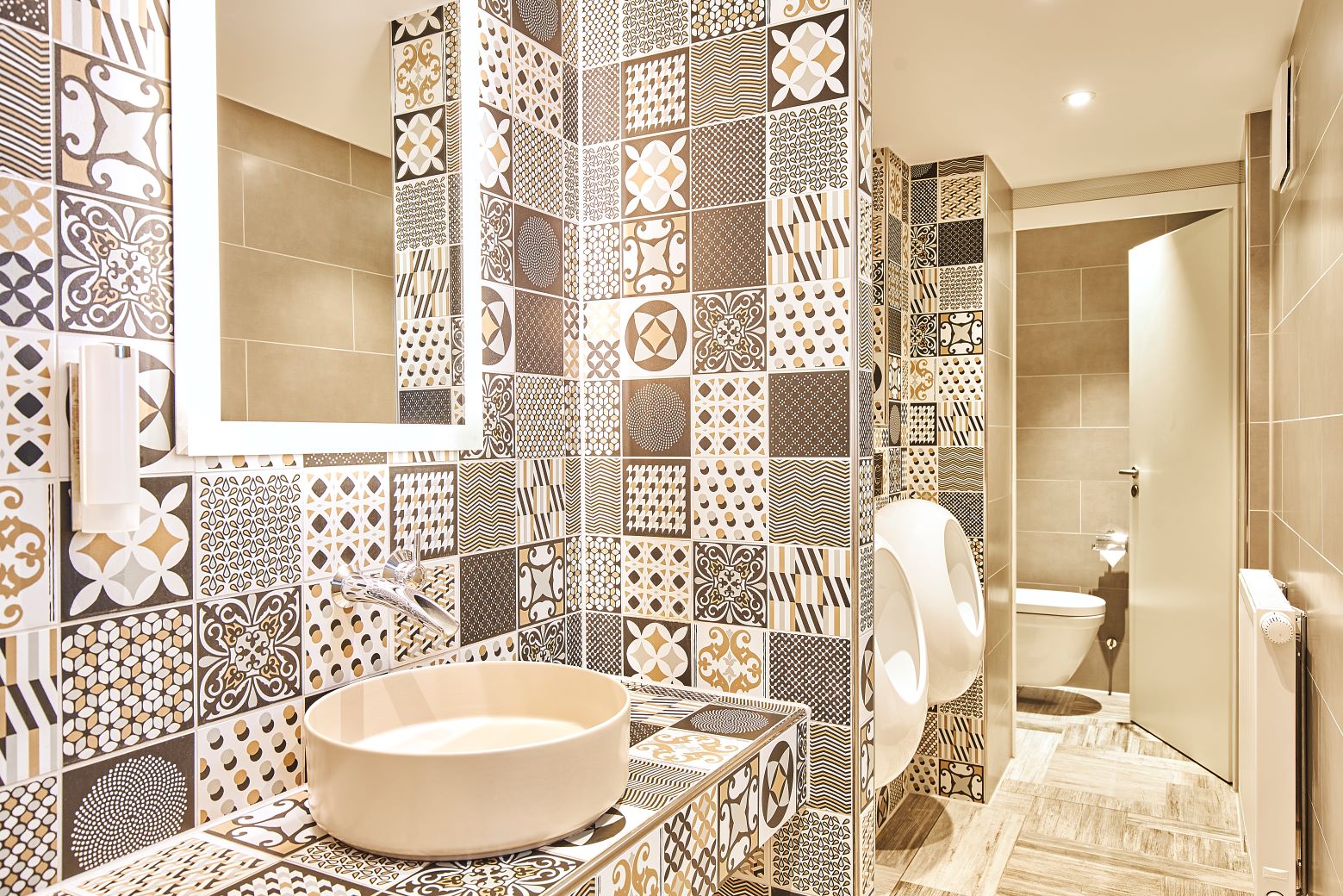
Sound and scent can also be made tangible before a hotel is built.
We create on-site sound simulations and develop scent samples, allowing the client to experience—not merely imagine—the atmosphere being proposed.
This is how an invisible idea becomes a design decision.
I do not believe in overpowering “signature fragrances.”
Scent must be healthy, restrained and appropriate to the place, particularly because many guests have sensitivities to fragranced environments.
My practice is guided by four connected pillars: strong storytelling, sense of location, regenerative design and multisensory design.
The goal is not to make every project recognisable as mine.
It is to make every project unmistakably itself.
Choosing the right experience
The senses must always be rooted in location and geography.
When we travel to Saudi Arabia, Italy or Norway, we expect fundamentally different atmospheres—not merely a different visual style.
Each country has its own light, climate, humidity, landscape, culture, soundscape, scent and rhythm.
A beach hotel may be shaped by ocean wind, salt air, coastal planting, birds, waves, sand and the expansive acoustic quality of the sea.
A city hotel responds to a different reality: urban energy, density, traffic, architectural reverberation, social life and often unwanted noise.
A mountain retreat, desert resort and lakeside hotel each require their own sensory language.
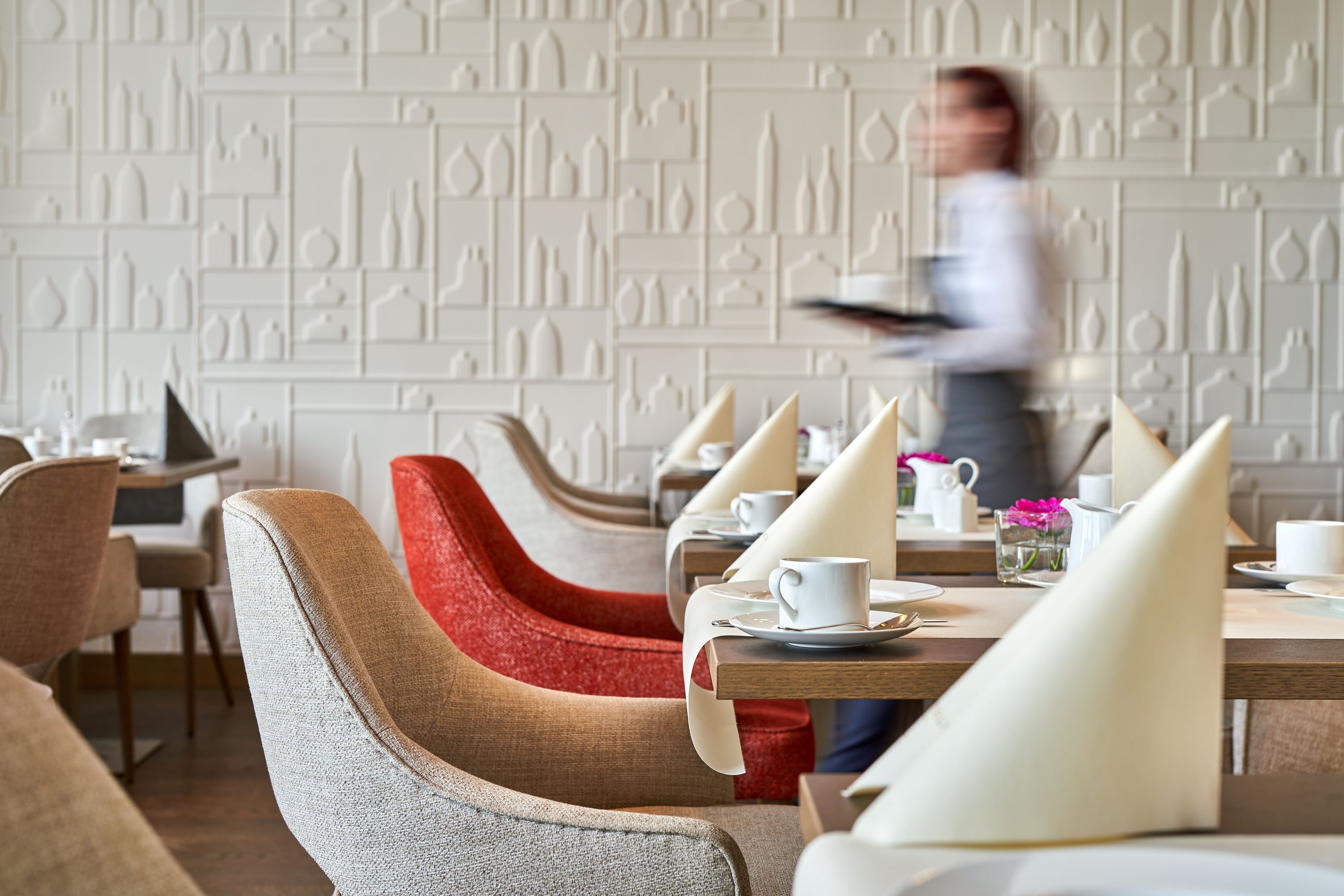
This is why sensory design cannot be copied from one project to another.
I look individually at sound, scent, air, light, materiality, temperature, movement and touch.
Touch is not only the surface of stone, timber or textiles.
It is also human touch: the quality of welcome, a gesture of service and the human need to feel genuinely cared for.
The aim is to create a sense of geography: to allow guests to feel, through their whole body, where they are.
We do not impose a sensory formula; we uncover the emotional and cultural identity that already exists within a place.
Memory, sound and scent
Sensory memories are deeply personal.
A fragrance may return one person to childhood and mean nothing to another; a song may evoke joy in one guest and nostalgia in someone else.
This is why sensory design must be subtle, intelligent and respectful. It should never overwhelm or dictate a response.
All senses matter, but their role changes with the setting and moment in the guest journey.
In a bedroom, acoustic comfort, darkness, temperature, air quality and tactility may matter more than visual drama.
In a restaurant, sound, scent, taste, light, materiality and social energy must work together.
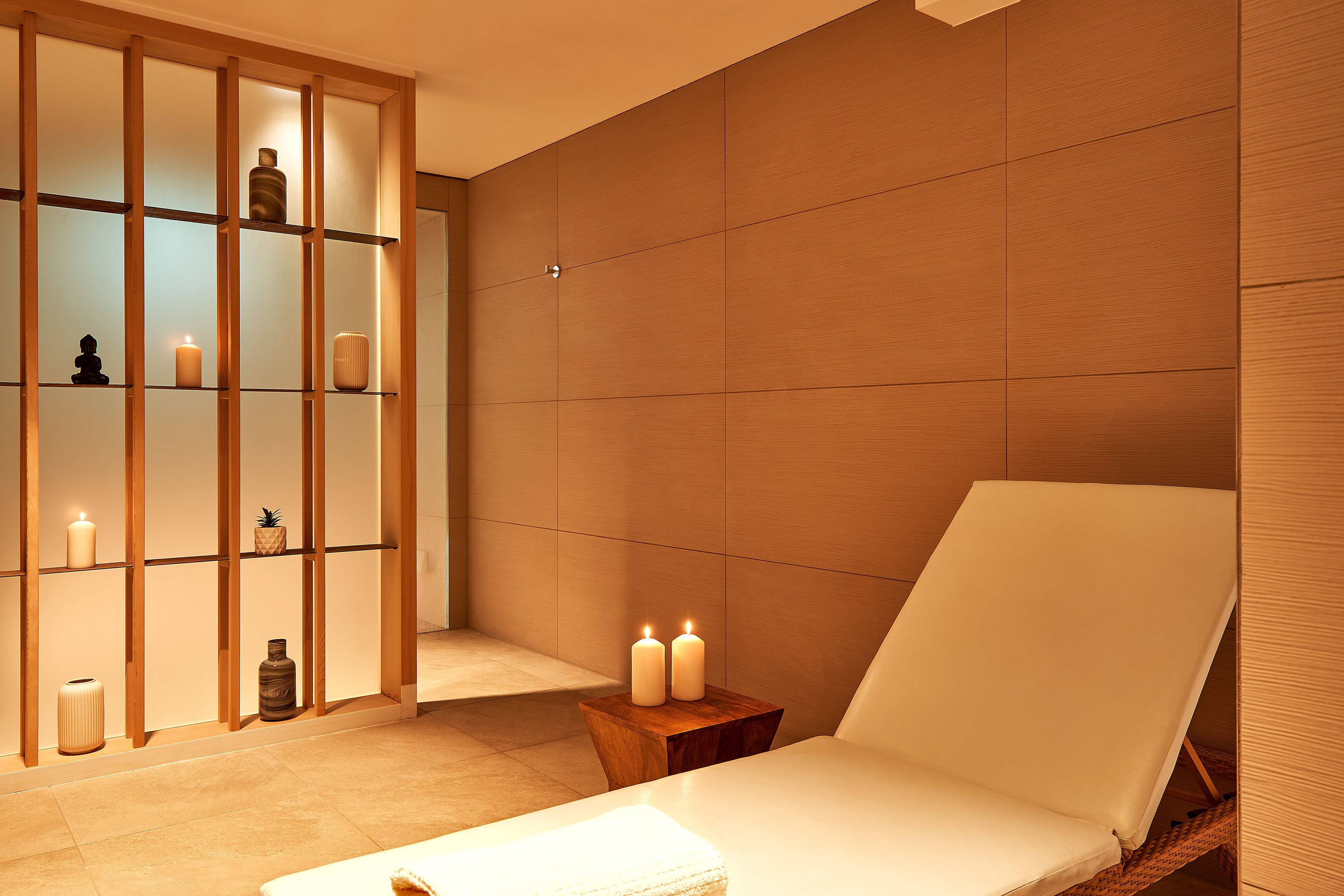
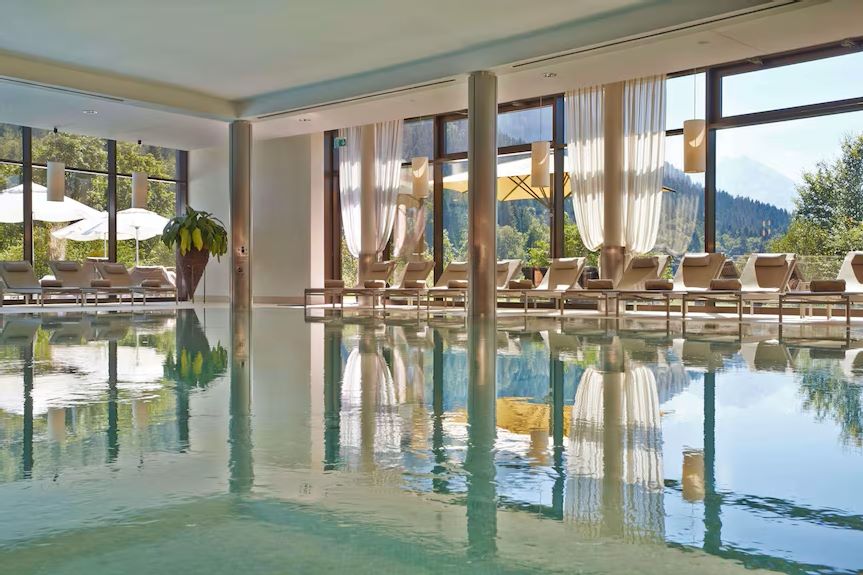
In a spa, the journey from stimulation to calm can be shaped by water, warmth, rhythm, silence and touch.
Sound and scent are among the most powerful routes into emotional and autobiographical memory.
A familiar perfume can bring back a grandparent, a childhood home or a particular city in an instant.
I still remember a French fragrance worn by my grandmother in Iran before the Revolution.
Whenever I encounter it, she returns to me—not simply as an image, but as a living emotional memory.
Scent is always present, whether it is designed consciously or not.
Too often, the first smell a guest encounters in even a luxury hotel is the chemical residue of cleaning products or a heavy artificial fragrance.
That can be one of the fastest ways to undermine a sense of wellbeing. I believe scent must be extremely subtle, natural and connected to the place.
We also design for choice.
A guest should be able to turn sound and scent on or off, or adjust the intensity, because comfort is personal.
Certain natural scents can support different moments in the guest journey: for example, orange has been explored in sleep research, while fresher citrus profiles can be used more gently to create a sense of energy in the morning.
But the aim is never to prescribe a feeling or make a medical claim. It is to create a flexible sensory environment that guests can personalise for themselves.
Stories translated into space
For a Penguin Books installation at Sleep + Eat in London, I explored how literature could become an immersive sensory environment.
I selected works by Rumi, Plato and Elizabeth von Arnim, creating a dialogue between spirituality, philosophy, nature, freedom and emotional escape.
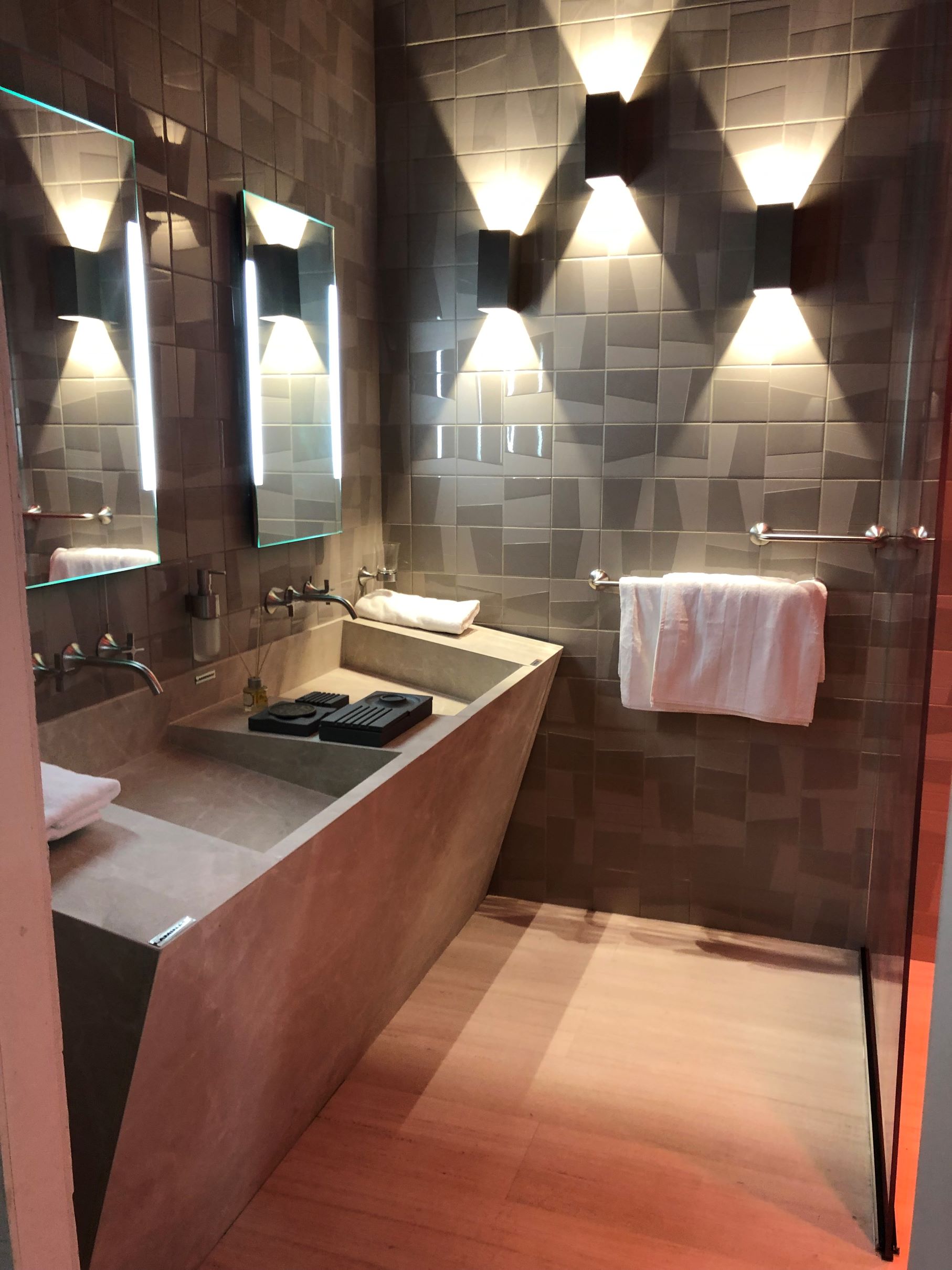
I extracted words and fragments from the texts and transformed them into mantra-like sequences.
Together with a soundscape artist and voice artist, we developed an immersive spatial sound composition.
It was not static sound in the background: voices, mantras and fragments travelled through the installation, surrounding and guiding visitors as they moved through the space.
Technology became a meaningful tool for emotional connection rather than spectacle.
A chef’s excellence in space
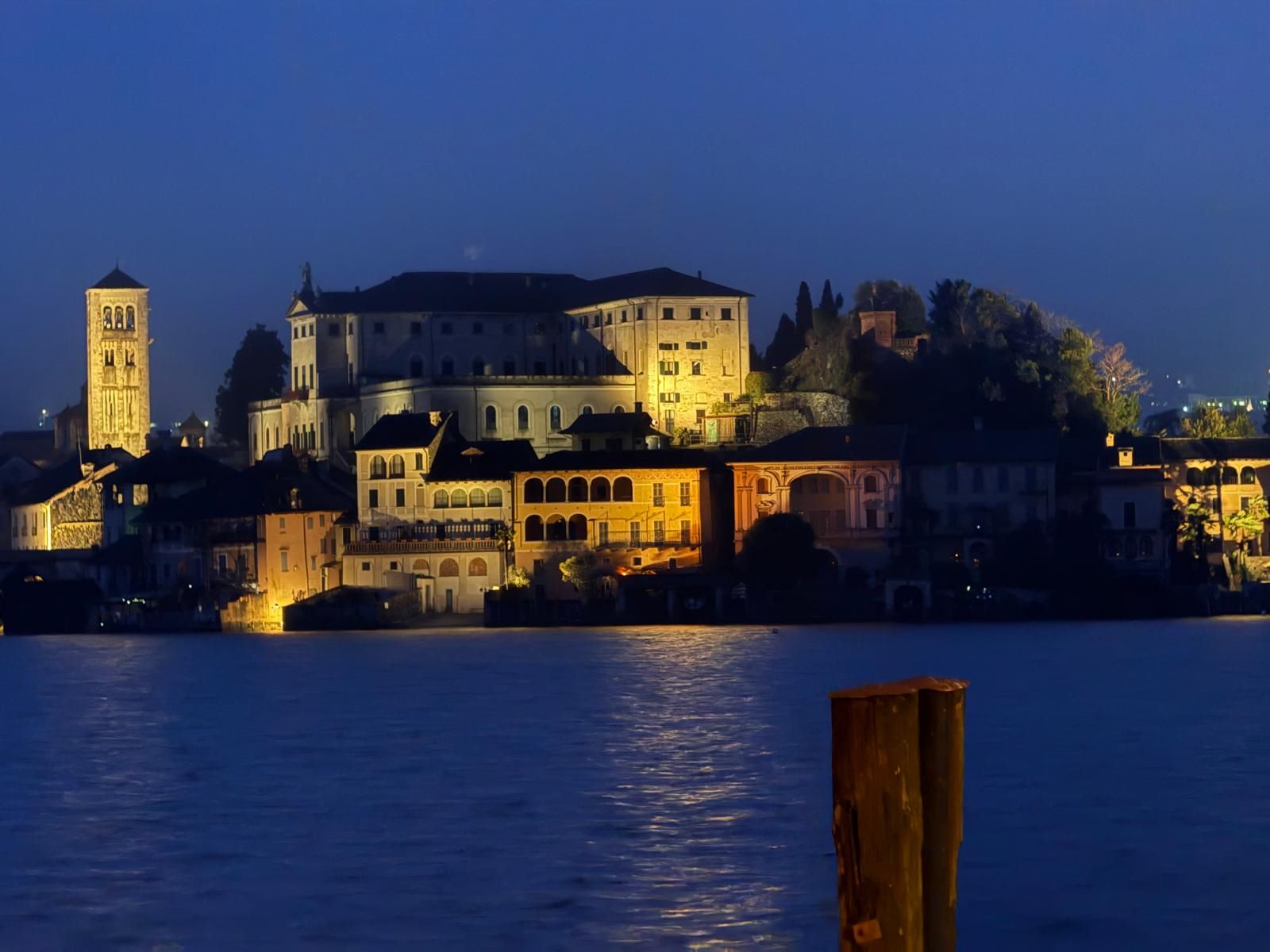
I am currently developing a multisensory concept for Antonino Cannavacciuolo, one of Italy’s most celebrated chefs, internationally known as a MasterChef Italia television judge and for the three Michelin stars held by his flagship, Villa Crespi.
The concept is for one of his lakeside hotels in northern Italy.
The challenge is to translate the excellence of a three-Michelin-star chef into spatial and multisensory design.
Just as extraordinary cuisine is composed through seasonality, precision, texture, memory, surprise and emotion, an interior can be composed through sound, scent, materiality, touch, light, temperature and rhythm.
I began by spending time at the lake and researching its history, atmosphere and cultural memory.
I studied the writers and poets who had lived around the lake, visited it frequently or found inspiration there, then selected fragments from their work and transformed them into mantra-like sequences.
This became the emotional and literary foundation for the concept.
Wherever possible, I engage local talent in the countries where I work.
In Italy, I worked with an Italian sound artist and an Italian immersive-speaker technology company to translate the literary fragments, field recordings of water and wind, and the changing atmosphere of the lake into a spatial soundscape.
The result was designed not as background music, but as an immersive composition moving through the suites—voices, literary fragments, water, wind and sound travelling around the guest.
To make this invisible dimension tangible at concept stage, we created an on-site sound simulation so the client could experience the intended atmosphere, direction and rhythm in the actual setting, rather than merely imagine it from drawings.
Scent was explored in the same practical way through natural scent samples, with subtle references to the lakeside landscape, local planting and the chef’s own sensory world.
We also proposed circadian lighting, designed to support the guest’s natural rhythm through changing levels and warmth of light from morning to evening.
The interiors use a regenerative palette of circular materials made from food waste: Sicilian orange waste transformed into vegan leather; olive pits repurposed into table surfaces; and coffee waste used in furniture.
Alongside sound, scent and light, these materials make the sensory experience restorative, memorable and materially meaningful.
The aim is not to imitate cuisine in interiors.
It is to create a multisensory spatial experience with the same depth of research, local intelligence, storytelling and sensory refinement that defines exceptional cooking.
Regenerative luxury and value
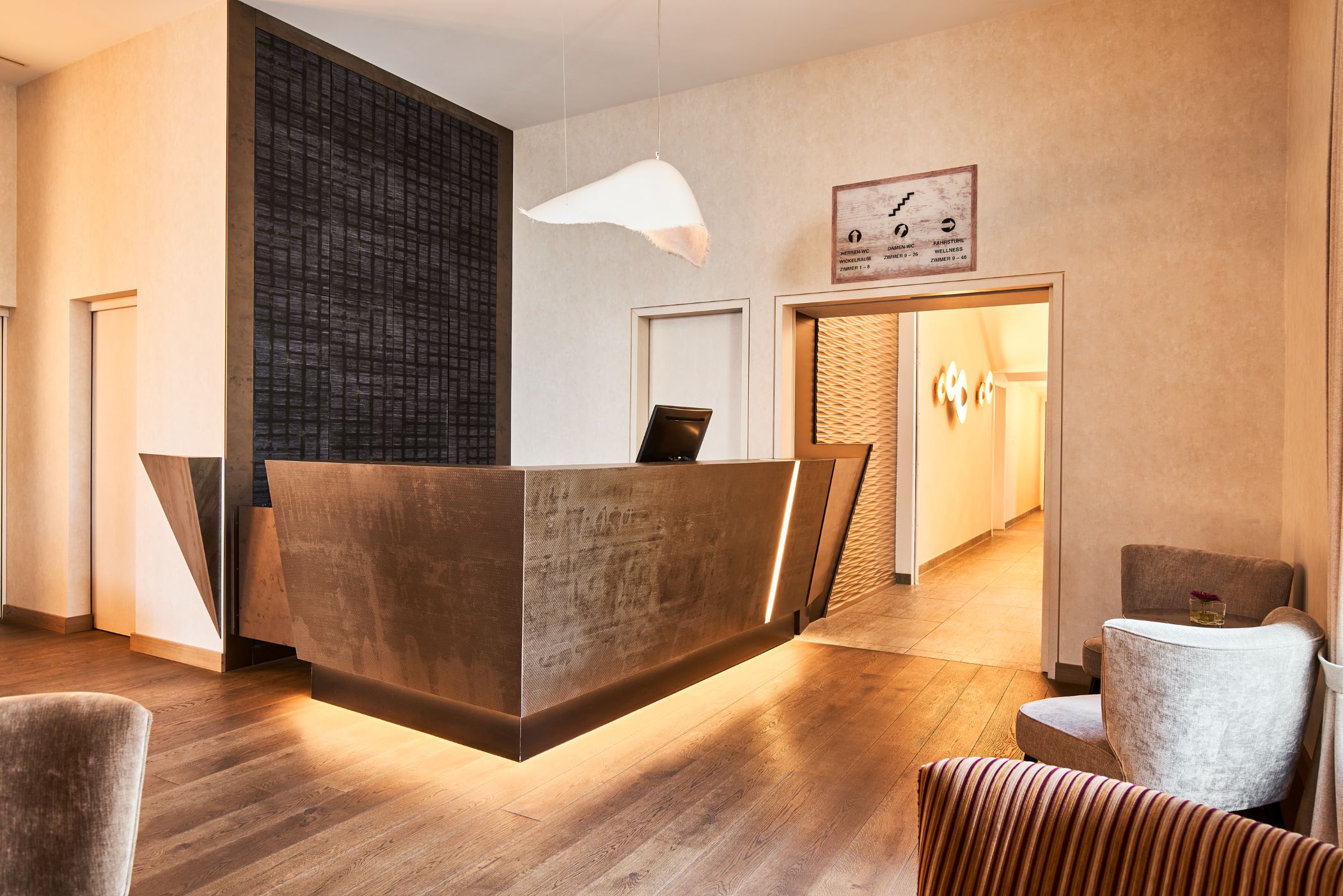
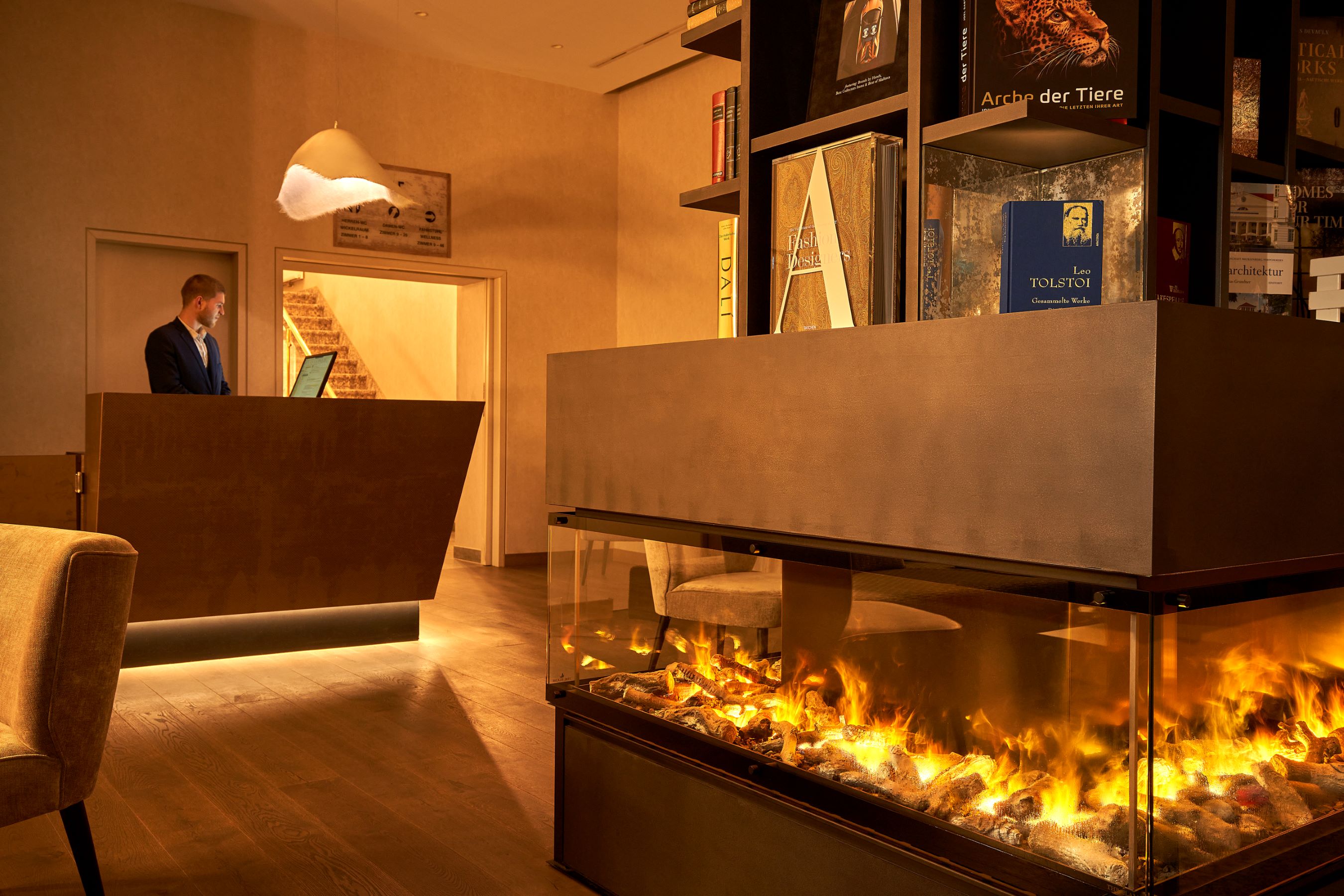
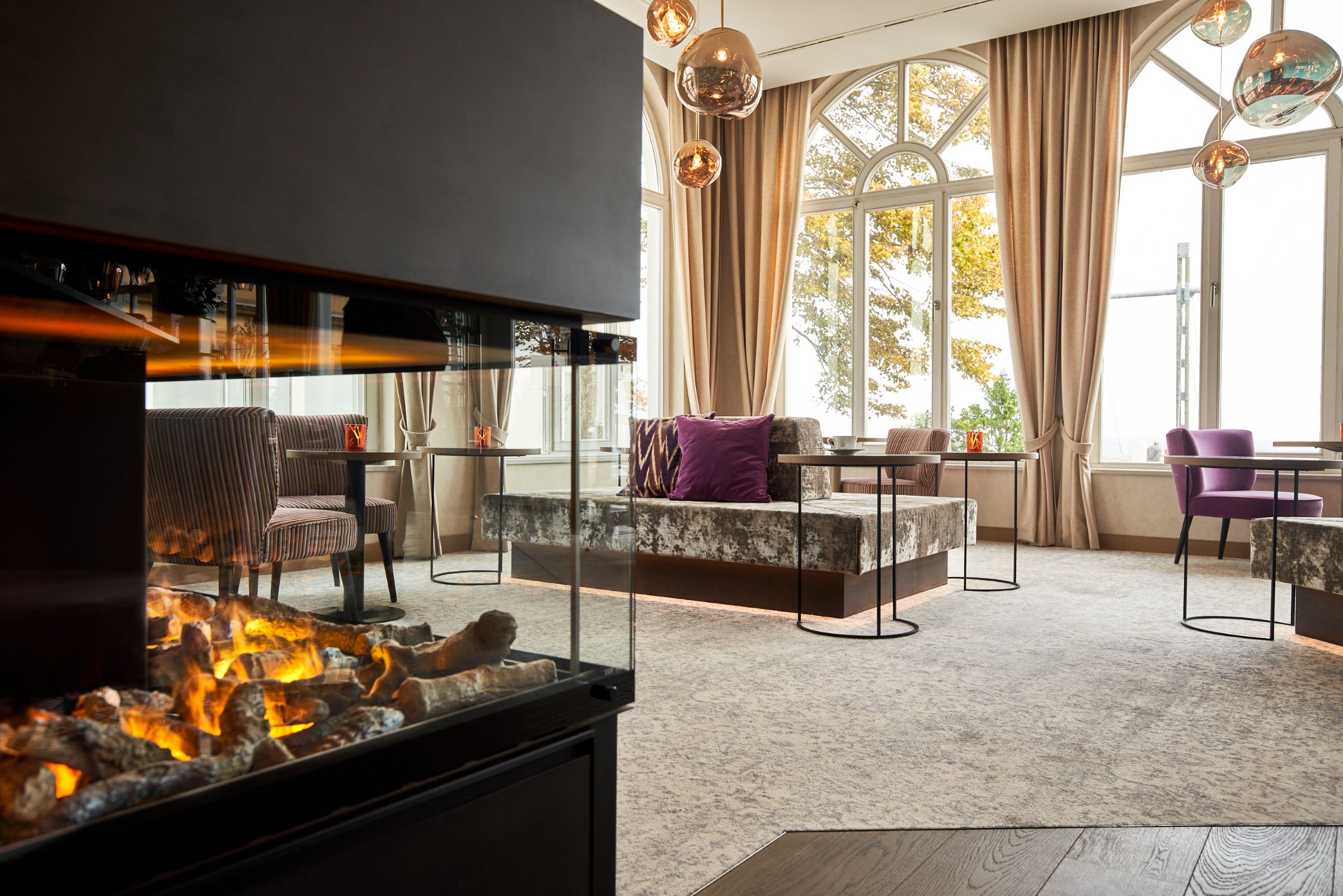
At Strandhotel Atlantic and Villa Meeresstrand in Usedom, directly on the Baltic Sea, our design connected sustainability, literature and sensory experience.
The natural soundscape of the ocean, coastal planting and the atmosphere of the sea were central.
We also referenced writers including Tolstoy and Gorky, using pixelated imagery behind beds and within suite spaces to create a subtle blur between past and present.
The properties received an OPAL Award for Best Global Boutique Hotel.
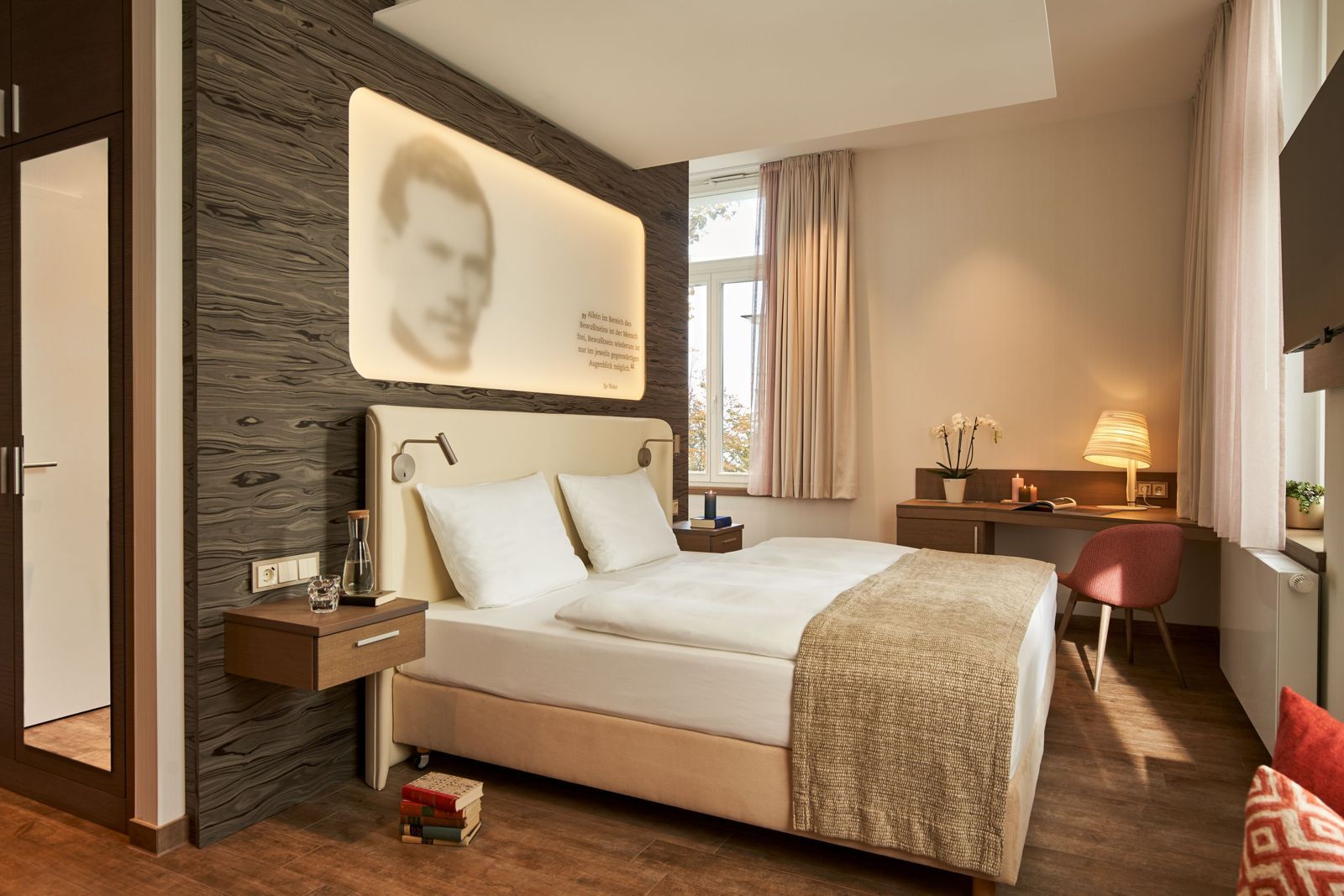

At Kempinski Hotel Berchtesgaden, non-toxic materials and lush planted terraces formed part of the sensory experience.
Planting was not decoration: it offered shade, biodiversity and natural seasonal fragrance.
I am equally interested in technology where it improves wellbeing and reduces environmental impact—through natural cooling strategies in place of excessive reliance on air-conditioning, healthy materials, responsive lighting, planting that provides shade and scent, and sound technologies that support acoustic comfort.
The best technology is often invisible.
It makes a place quieter, healthier, more comfortable and more climate-responsive without becoming a gimmick.
These ideas have informed my international talks and teaching for many years, including World Economic Forum side events in Davos, COP gatherings and hospitality and design forums worldwide.
When the invisible forces of a place—sense of location, wellbeing, acoustic comfort, material health and emotional connection—are designed coherently, they become tangible commercial value.
They can strengthen guest satisfaction, differentiation, repeat visitation and long-term asset value.
Ultimately, hospitality is a win-win proposition.
When a guest feels genuinely understood and wants to return, the operator, investor and destination all benefit.
The greatest luxury is not to enter a hotel and recognise the designer.
It is to arrive somewhere and feel that the place could not possibly have been created anywhere else.
A 15-minute investor perspective
My complimentary 15-minute investor perspective is a short discovery call, not a design solution.
It is an opportunity to understand the first emotional and strategic outline of a project: what success looks like for the investor or developer, what their ideal outcome would be and what they hope to achieve by working with the right partner.
In those 15 minutes, I ask the questions that should come before the first drawing, mood board or visual idea.
Is there alignment between the ambition, the location, the target guest and the experience the project needs to create?
The purpose is to offer a first direction and make clear what needs deeper investigation.